Proposed four-day journey combining Lares mountain walking, Quechua weaving communities and a train connection to a guided Machu Picchu visit—not four full trekking days and no arrival through the Sun Gate.
Moderate–challenging route via Ipsaycocha Pass at 4,450 m, with a proposed Day 1 Lares hot-springs stop whose admission is unspecified.
Two proposed camping nights, one Aguas Calientes hotel night and a planned guided citadel visit, with a proposed maximum group size of eight travelers.
This proposal does not list a trek permit among its requirements, but permit rules, admission, trains, accommodation and departure arrangements should be verified with the operator for your dates. Request a dated, itemized quote on WhatsApp.
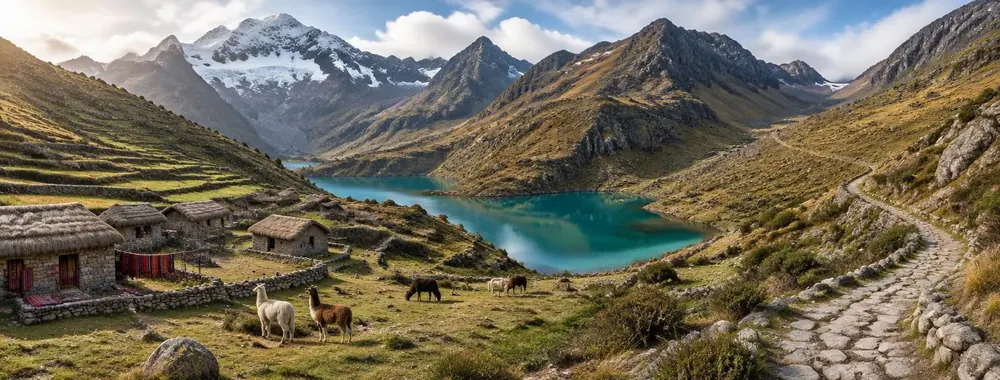
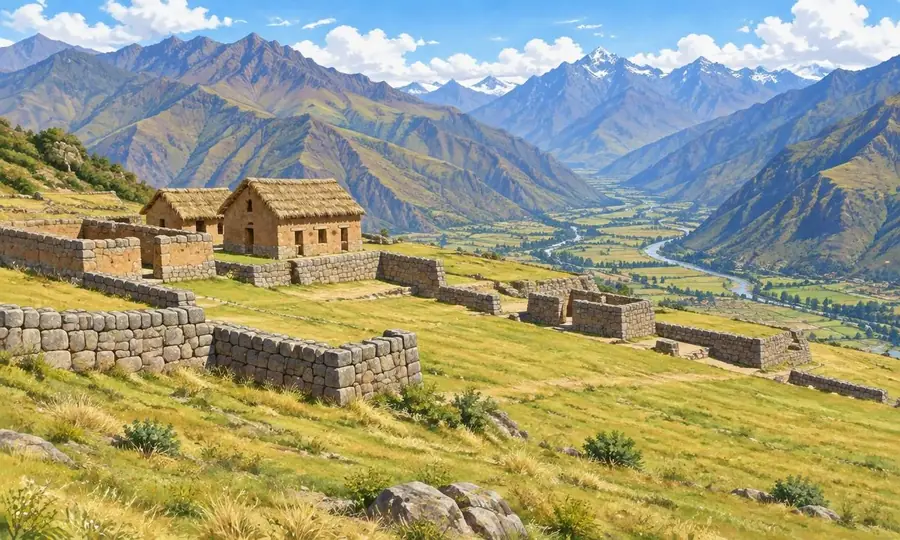
Illustration of the Lares highlands; not a photograph of the proposed camps or a confirmed departure.
Which Lares route is this—and who it suits
Choose this proposed standalone Lares Trek if highland walking, camping and encounters with living Quechua weaving communities matter more to you than walking into Machu Picchu on an Inca Trail route. The proposed four-day journey links the Lares region to Ollantaytambo by road, then Aguas Calientes by train, before a guided citadel visit on Day 4.
Lares names a region with several trekking variants, not one standardized trail. This proposal uses Ipsaycocha Pass at 4,450 m and continues via Patacancha; distances, camps and elevations from another Lares itinerary may not apply. The Lares route guide explains the variants before you compare proposals.
Compare the Classic Inca Trail for its authorized archaeological corridor, the Salkantay Trek for a different mountain route, or the Lares + Short Inca Trail combination if you also want an authorized trail section. None is automatically easier, cheaper or better; compare dated itineraries and complete quotes.
Your proposed four-day itinerary
Day 1: Cusco, Calca and the Lares hot-springs area
Proposed road travel via Calca to Lares with a hot-springs stop if arrangements allow, and the first camping night in the Lares area. Confirm the trailhead if walking is planned, the named campsite, bathing arrangements and the unspecified hot-springs admission.
Day 2: Ipsaycocha Pass, 4,450 m
Proposed mountain walking past community landscapes and high lakes to this itinerary’s highest pass, followed by the second camp. Confirm the distance, ascent, descent, walking window, water refills and camp elevation in the dated itinerary.
Day 3: Patacancha, Ollantaytambo and Aguas Calientes
Proposed final walking stage via Patacancha, road connection to Ollantaytambo and train to Aguas Calientes for the proposed hotel night. Confirm the walking finish, transfer margin, station reporting deadline, baggage handovers and room arrangements.
Day 4: Guided Machu Picchu visit and return to Cusco
Planned guided citadel visit using the admission, circuit and entry time secured, then the agreed return train and road transfer. Confirm any citadel bus arrangements; no particular circuit, early entry or final arrival time is promised.
Route at a glance: Cusco → Calca → Lares hot-springs area and first camp → Ipsaycocha Pass, 4,450 m → Patacancha → Ollantaytambo → train → Aguas Calientes → Machu Picchu → Cusco. This is a proposed sequence, not a navigation map or a confirmed schedule, and the four calendar days are not four full trekking days.
Day 1 travels via Calca to Lares for a proposed hot-springs stop and the first camping night; bathing and admission are not assumed inclusions. Day 2 is the proposed high-pass day over Ipsaycocha Pass, followed by the second camp. Day 3 finishes the walking via Patacancha, connects by road to Ollantaytambo and takes the train to Aguas Calientes for the proposed hotel night. Day 4 is the planned guided Machu Picchu visit using the admission, circuit and entry time secured, then the agreed return train and road transfer.
Daily distances, walking hours, ascent and descent totals, campsite names and elevations are unspecified in this proposal. Request them, plus water refill points and any weather-dependent alternatives, in the dated itinerary before deciding whether the route suits you.
Confirm the Cusco meeting point, each day’s trailhead and endpoint, and the named camps with their elevations.
Request daily distances, estimated walking windows, ascent and descent for every stage.
Confirm the Day 3 train operator, service, station and reporting deadline using the Ollantaytambo station guide.
Obtain the Day 4 admission details, guide meeting point and return arrangements before fixing any onward travel.
Difficulty, altitude and preparation for 4,450 m
This proposed route is moderate–challenging, reaching Ipsaycocha Pass at 4,450 m. That figure belongs to this itinerary, not every trek sold under the Lares name; sustained climbs, uneven descents, cold camping nights and consecutive active days matter alongside the headline altitude.
Prepare with progressive hill walks, controlled descents and back-to-back active days using your intended footwear and daypack, and share your recent hiking experience before booking. A shorter package does not make a high-pass trek easy.
Allow separate acclimatization time in the Cusco region rather than treating Day 1 as altitude preparation. Fitness does not prevent altitude illness and no fixed number of days guarantees protection; read the Cusco altitude preparation guide, seek individualized clinical advice for health concerns and report symptoms promptly rather than pushing toward the pass.
Ask the quote to explain guiding coverage, communications, first-aid and oxygen provision, early-exit options and evacuation responsibilities, including who accompanies a traveler who cannot continue and which costs arise. If horsemen are part of the proposal, their role covers baggage at most; it does not establish a riding or rescue service. Arrange insurance covering the confirmed activity and altitude.
Two camps, one hotel: tents, meals, water and facilities
The proposed three-night pattern is two Lares camping nights and one Aguas Calientes hotel night. The proposal describes camping equipment, a cook, horsemen, trek meals, a licensed guide, the hotel, Machu Picchu entry, trains and transfers as the package basis; the written quote must confirm each item’s actual scope for your dates.
At camp, confirm tent occupancy, sleeping mats, toilets, washing facilities and whether any shower or hot water exists. Sleeping bags and trekking poles are proposed as rentals rather than inclusions—confirm availability, charges, sizing and suitability for the expected overnight temperatures.
Request the meal schedule day by day, drinking-water treatment and refill points, and written confirmation of how dietary needs or allergies would be handled across camp kitchens and the hotel.
For Aguas Calientes, request the hotel or agreed category, room occupancy, bathroom arrangements, breakfast and any single-room supplement, plus dinner on arrival and early-breakfast timing against the Machu Picchu meeting time. Do not assume heating, laundry, charging or bag holding.
Tents: occupancy, sharing allocation and any private-tent supplement.
Sleeping system: whether mats are supplied, rental availability for sleeping bags and how bedding stays dry.
Facilities: toilets at each camp and the arrangements between camps.
Water: treatment method, refill locations and required carrying capacity.
Hotel: name or category, room basis, bathroom, breakfast and supplements.
Baggage and train logistics across three settings
Plan a daypack for walking, a permitted camp duffel and a clearly agreed arrangement for anything you leave behind. Horsemen appear in the proposed support, but that does not establish a personal baggage allowance, continuous bag access or carriage of a main suitcase—confirm the duffel’s weight and size limits and when it is collected and returned.
The trek baggage arrangement is not the train baggage allowance. Confirm what travels to Aguas Calientes, how camping gear is separated and where larger bags are kept and collected, including charges. Keep medication, valuables, water and weather layers with you.
Use the Ollantaytambo station guide for connection context, then obtain your actual station reporting deadline and the road-to-rail and station-to-hotel handovers in writing.
Community encounters and Lares hot springs
Lares passes through inhabited landscapes where weaving, farming and herding are everyday life. Choose the route for that character, not for a promised workshop: a named demonstration, home visit or hosted meal must appear in the dated itinerary, with any local fee explained.
Ask permission before photographing people, especially children, and accept refusals without pressure. Enter homes and fields only by invitation, and keep textile purchases voluntary.
A Lares hot-springs stop is proposed on Day 1, subject to the route and schedule. Admission is unspecified and must be itemized in the quote, along with bathing time, towels and changing arrangements; bathing is optional recreation, not altitude treatment.
Lares Trek vs Inca Trail and Salkantay—and the sold-out question
This proposed route is presented as needing no Lares trek permit for its trekking access, which is part of why Lares is worth considering when Classic Inca Trail permits are sold out. Verify current permit and access rules with the operator for your dates: that advantage concerns trek access only and does not create Machu Picchu admission, reserve trains or guarantee that a departure operates.
As proposed: 4 days / 3 nights; quote-only price; moderate–challenging rating; Ipsaycocha Pass at 4,450 m; two proposed camps plus one Aguas Calientes hotel night; communities, high lakes and a proposed hot-springs stop; a train connection to the guided citadel visit; a proposed maximum group of eight. Rival Inca Trail and Salkantay specifications are not supplied here, so no relative difficulty, price or value ranking is established.
Choose a train-based visit instead if you want Machu Picchu without multi-day camping; removing Lares does not remove the need for dated admission and compatible transport. The Inca Trail versus Lares guide helps frame the comparison—decide with actual itineraries and quotes.
Best time and what to pack—confirm for your departure
General weather patterns and full packing lists for the Cusco region are covered by the Lares route guide and the Machu Picchu weather guide; this page sticks to what you should verify for this trek before booking.
Conditions on this specific route matter most: ask the operator how the proposed path and camps are affected by weather around your dates and what happens to the itinerary in rain or snow—do not rely on a Cusco forecast. The Inca Trail’s usual February maintenance closure does not itself close Lares, but local trail and community access remain separate checks for your dates.
Confirm your gear against the proposed itinerary rather than a generic list: broken-in footwear, warm layers and waterproofs matter most on the high-pass day. Sleeping bags and trekking poles are proposed as rentals rather than inclusions—verify rental status, charges and sizing before deciding what to bring.
If the proposed Day 1 hot-springs stop is part of your plan, pack swimwear and a towel only once bathing is agreed, and ask whether towels are provided.
Cost and booking: request the dated itemized quote
No selling price is published for this proposal. Request a dated, itemized quote showing the total, currency, fees, supplements and validity, with every service marked included, excluded or optional. Compare complete arrangements rather than headline amounts, using the Machu Picchu quote checklist.
Start on WhatsApp with preferred dates, traveler count and flexibility, adding only details that change the plan: recent hiking experience, private/shared preference, room needs, children’s ages or practical walking needs. Solo travelers should confirm departure operation, tent sharing and room basis; families need an individual assessment based on children’s ages and consecutive-day walking experience.
Before payment, obtain the named route, daily profile, availability status and the deposit, balance, cancellation, change and disruption terms. If you already hold tickets or transport, provide their dates, routes and times for a compatibility check before buying duplicates.
An enquiry reserves nothing. Do not send identity documents, passport numbers, ticket QR codes, payment details or medical records in the first message; if you proceed, agree how necessary booking information will be collected before sharing it.
Transport: Cusco pickup and return, road legs, outward and return trains, stations, service class and any citadel bus charges.
Guiding and support: licensed guide coverage, cook, horsemen, proposed group maximum of eight, operating minimum and baggage allowance.
Admissions: Machu Picchu date, circuit and entry time; community fees and the unspecified hot-springs admission.
Accommodation: two camp nights and one Aguas Calientes hotel night with locations, occupancy and equipment.
Meals and water: covered meals, hotel breakfast, dietary arrangements, treatment and refill points; excluded snacks and drinks.
Rentals and exclusions: sleeping-bag and pole rental; tips and insurance excluded, tipping optional.
Safety and disruption: communications, first-aid and oxygen provision, early exits, missed connections and additional costs.
No. The four calendar days combine Lares walking, road transfers, train journeys and the guided Machu Picchu visit. Request the daily walking breakdown rather than treating the package duration as hiking time.
What does the Lares Trek cost?
This proposal is quote-only, with no published selling price. Request a dated, itemized quote covering the route, guiding, admissions, camps, the hotel night, transport, rentals and booking terms.
Do I need a Lares trek permit?
This proposal is presented as needing no Lares trek permit for its trekking access, but you should verify current permit and access rules with the operator. Machu Picchu admission, trains, the hotel and local arrangements still need dated availability checks, so permit-free does not mean instant confirmation.
Can I book Lares when the Inca Trail is sold out?
You can consider Lares as a genuinely different route because it does not depend on an Inca Trail permit. It cannot replace sold-out Machu Picchu admission or guarantee available trains, accommodation or a departure.
Do we walk into Machu Picchu through the Sun Gate?
No. This itinerary finishes the Lares walking, then connects by road to Ollantaytambo and by train to Aguas Calientes. The guided citadel visit follows the admission secured. If an authorized trail approach matters to you, compare the Lares + Short Inca Trail combination.
How difficult is this route, and how high does it go?
It is moderate–challenging and reaches Ipsaycocha Pass at 4,450 m. Daily distances, walking hours, ascent, descent and sleeping elevations are unspecified here and must be requested for this itinerary, not assumed from another Lares route.
Which nights are camping and which are in a hotel?
The proposed split is two Lares camping nights and one Aguas Calientes hotel night on Day 3. The quote must confirm camp names and elevations, tent sharing, hotel category and room arrangements.
Are the Lares hot springs included?
A Day 1 stop is proposed, but hot-springs admission is unspecified and must be clarified in the quote. Confirm the bathing time, towels and any charge; bathing is optional, not altitude treatment.
Who carries my luggage?
Horsemen appear in the proposed trek support, but the personal-baggage allowance and what you carry are unspecified. Confirm the daypack requirement, duffel limits, train baggage rules and each bag handover; a pack animal is not a riding or rescue service.
Are meals and dietary needs covered?
A cook and trek meals are described as part of the package basis, but the exact meal count, hotel breakfast and drinking-water arrangements need written confirmation. Describe dietary requirements or allergies early and ask what can realistically be provided.
Can solo travelers, beginners or families join?
They can enquire for an individual suitability and availability assessment, not guaranteed acceptance. Share recent hill-walking experience, children’s ages and practical needs, then confirm group operation, pacing, tent sharing, room basis and any supplements.
How do I book?
Enquire on WhatsApp with preferred dates, traveler count and flexibility, requesting a dated, itemized proposal and a complete availability check. Review the itinerary, admissions, services and payment terms before proceeding; do not send identity documents or payment details in the first message.
Still have a question?
Your start dates and party for the proposed four-day Lares Trek.
Route variations below are planning context, not additional inclusions or changes to this listed tour. Ask for a dated proposal for any different route.
Which Lares trek route should you choose?
Choose a Lares trek by its trailhead, elevation profile and overnight stops, not simply by the number of days advertised. Routes can connect Lares, Huacahuasi, Quishuarani, Patacancha, Huaran or other valleys in different combinations.
One route runs through the Lares and Huacahuasi area toward Patacancha, followed by a transfer toward Ollantaytambo. Others begin around Quishuarani or Huaran, with different passes and finishes. These place names describe route families, not interchangeable promises. Ask for a marked map, the direction of travel and the elevation of every camp before comparing.
Hot springs are only included if the route actually visits Lares town and allows time for bathing; confirm admission and towel arrangements too. A map for another Lares variant cannot tell you how far you will walk, which pass you will cross or where you will sleep.
Route names and pass spellings vary. Identify the trailhead, pass and finish on your proposal’s map. Download the confirmed route map for offline use, and ask which sections lack reliable communication. An app track is not a substitute for local access checks or an evacuation plan.
Make a community visit resilient to a change of host
If a textile encounter or hosted meal is the reason you choose a Lares route, establish whether it is a booked activity or a hoped-for meeting while passing through. Ask what the experience consists of, who arranges it and what happens if the host is unavailable. Residents’ work, family commitments and consent take precedence over a tour’s expectation of access.
Choose a route you would still value for its walking and landscapes if the encounter changes. If a specific hosted activity is essential, ask for its booking and cancellation terms separately rather than accepting a general promise of village culture. Do not try to replace a canceled visit by approaching another home uninvited or distributing gifts to draw people into photographs.
Check current access and community arrangements before planning an independent Lares trek. Navigation and emergency planning are your responsibility. A knowledgeable guide is a sensible choice for unfamiliar high-altitude terrain. Do not assume signs or phone coverage will be reliable.
Can I bring a dog on the Lares trek?
Do not assume a trail-app listing gives permission for your itinerary. Ask the operator and relevant communities about animals, livestock interactions, camps and onward transport. A trekking arrangement does not establish permission on trains or at Machu Picchu.
What if the advertised village host is unavailable?
Use the alternative agreed with the organizer, which may be a different consenting host or no hosted visit. Do not assume access to another household. Decide before booking whether the trek remains worthwhile without that particular encounter.
Still have a question?
Ask for the proposed route and any optional arrangements in writing; an enquiry is not a reservation.