Proposed Ausangate Trek 5D / 4N itinerary. Request the dated route, services and full-party quote before booking.
Destination illustration · not a confirmed departure or service.
Tour specs at a glance
Group size
Confirm for your departure
Altitude profile
Confirm the selected route and daily elevation profile
Proposed duration
5 days / 4 nights
Difficulty
Very challenging
Meeting point
Cusco area; meeting arrangements to confirm
Quick answer
The Ausangate trek is a high-altitude camping journey among glaciers and lakes near Cusco, Peru. This five-day/four-night package visits Rainbow Mountain on Day 4.
It is very challenging: Palomani Pass reaches approximately 5,200 m, most nights are above 4,000 m, and several acclimatization days are essential.
Request Cusco hotel pickup, guide, transport, camping equipment, cook, horsemen, meals and any emergency horse in your quote, with sleeping-bag and pole charges itemized. Machu Picchu is not included.
Request airport transfer and luggage-storage arrangements and costs with your dated Ausangate quote. Send your preferred trek dates on WhatsApp.
Use the Ausangate trek guide to assess the multi-day high-altitude route, then review Cusco altitude preparation. Ask for sleeping elevations, daily walking and the operating emergency plan; Machu Picchu admission is not part of this route.
Ausangate Trek 5 Days via Rainbow Mountain: route interests to discuss
These listed interests are not confirmed services or access. Ask which belong to your dated itinerary.
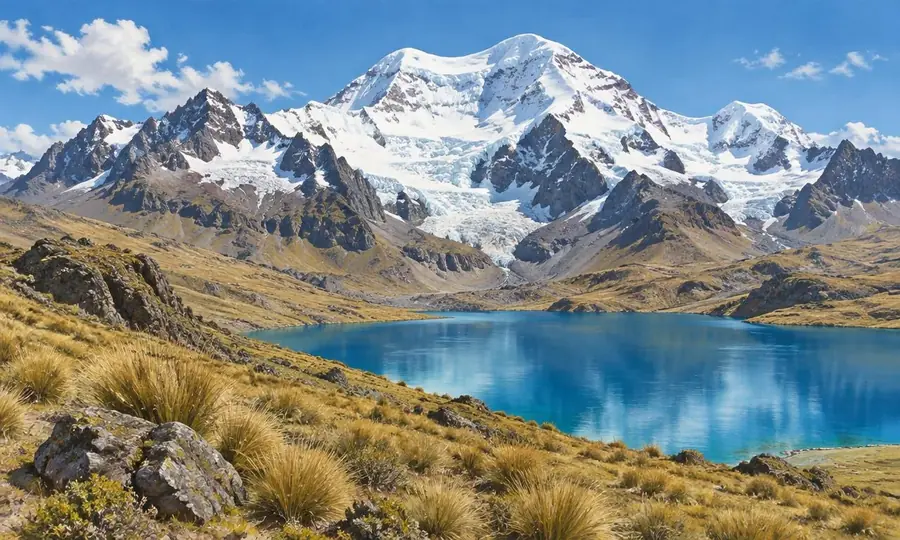
Ausangate glacier landscape
Glacial lakes
Listed Rainbow Mountain stage
Highland communities
Ausangate Trek 5 Days via Rainbow Mountain: proposed itinerary outline
Confirm the actual stages, overnight locations, access and connections before treating this outline as an operating schedule.
Proposed stage 1
Tinki → Upis
Proposed route outline: Drive to the trailhead and walk to camp below the glacier. Confirm the actual timing, access and services for your departure.
Proposed stage 2
Arapa Pass
Proposed route outline: Cross the first high pass past turquoise lakes. Confirm the actual timing, access and services for your departure.
Proposed stage 3
Palomani Pass
Proposed route outline: The highest point of the circuit, around 5,200 m. Confirm the actual timing, access and services for your departure.
Proposed stage 4
Rainbow Mountain
Proposed route outline: Walk to Vinicunca from the less-visited side. Confirm the actual timing, access and services for your departure.
Proposed stage 5
Return to Cusco
Proposed route outline: Short walk and drive back. Confirm the actual timing, access and services for your departure.
Ausangate Trek 5 Days via Rainbow Mountain: services and extra costs to confirm
Use these inventory questions to request an itemized quote. No service, rental, exclusion or price is established until accepted in writing for your departure.
Confirm whether separately payable: Personal snacks & drinks
Ausangate Trek: Services and Costs to Check
The Ausangate trek is a 5-day / 4-night camping journey from Cusco, Peru, rather than a hotel-based excursion. Request a quote itemizing the trekking team, transport and camp services, along with the proposed group size, to compare supported travel with arranging each remote stage independently.
Request guide, cook, horse-team, meal and camping-equipment coverage in your quote. Ask whether emergency horse support is proposed and on which sections; it is not a substitute for an evacuation plan or a horse for the entire route. Add airport transfer and luggage-storage requests if needed.
Ask about sleeping-bag and trekking-pole rental availability and charges. Travel insurance, tips, personal snacks and drinks are excluded. Request an itemized written quote showing rental charges and whether community, trail and Rainbow Mountain admission fees are included or payable separately. Local charges and local card-payment facilities are not specified.
Read our booking information alongside your quote. Keep the trek price separate from your wider Peru budget: accommodation before and after the walk, onward travel and personal equipment still need planning. A clear written breakdown makes the offer easier to compare without treating a different route or another operator’s equipment list as equivalent.
Ask for a licensed guide, cook, horsemen, transport, meals, camping equipment and any emergency horse in your quote, together with the group limit. Request accepted payment methods and any card or PayPal fees before payment. The trek-specific deposit and balance schedule must be stated in your written quote.
Quote checklist: guide, transport, camping equipment, cook, horsemen, meals, emergency horse arrangements, airport transfer and luggage-storage costs.
Ask about sleeping-bag and pole rental charges and exclusions for tips, travel insurance, personal snacks and drinks.
To resolve in your quote: admissions and community charges, rental prices, tent arrangements and any requested extra services.
Ausangate trek 5-day itinerary
Ausangate is a mountain in Peru’s Cordillera Vilcanota, in the Cusco region. The Ausangate trek explores surrounding highlands, glaciers and lakes; it is not a climb to the mountain’s summit. This five-day package starts with Cusco hotel pickup, visits Upis, Arapa Pass, Palomani Pass and Rainbow Mountain, and returns to Cusco on Day 5.
Day 1: Tinki → Upis
Travel from Cusco towards the trailhead, then walk towards camp below the glacier at Upis. This first stage introduces the open highland setting and the change from city accommodation to mountain camping. Send your hotel address to request pickup or meeting-point instructions, and ask when and how any pre-departure briefing takes place.
Day 2: Arapa Pass
The route crosses Arapa Pass and passes turquoise lakes. Expect the scenery to be inseparable from the effort: even an apparently gentle section can feel demanding at this altitude. Keep your waterproofs, warm layer and water accessible in your daypack rather than packed with the camp equipment.
Day 3: Palomani Pass
Palomani Pass, approximately 5,200 m, is the highest point listed for this five-day trek. This is a trekking pass, not an ascent of Ausangate’s mountain summit. The practical priority is a sustainable pace and an honest conversation with the guide about how you feel, not reaching the highest point at any cost.
Day 4: Rainbow Mountain
The itinerary reaches Vinicunca from the less-visited side. This approach is part of the attraction of linking Rainbow Mountain with a longer trek, but it does not guarantee an empty viewpoint. The guide manages the day around conditions and the group’s progress.
Day 5: Return to Cusco
A short walk and vehicle transfer bring the journey back to Cusco, with the drop-off point to agree in your quote. Leave breathing room before an onward journey rather than relying on a precise return time that has not been supplied.
This is a five-day Rainbow Mountain route outline, not a verified full circuit. The walking route has not been confirmed as a loop: Cusco pickup and return transfers do not establish a walking circuit. Connecting stages, overnight camps, the final trailhead, total distance, daily walking hours, ascent, descent and individual sleeping elevations are not yet confirmed in this description. Obtain the guide-reviewed route and matching map before booking; figures from another Ausangate circuit do not describe this package.
Day 1: Cusco transfer; Tinki → Upis and camp below the glacier.
Day 2: Arapa Pass and turquoise lakes.
Day 3: Palomani Pass, approximately 5,200 m.
Day 4: Rainbow Mountain via the less-visited side.
Day 5: Short walk and vehicle transfer to Cusco.
Ausangate trek difficulty, altitude and acclimatization
The five-day Ausangate trek is a very challenging high-altitude trek, reaching approximately 5,200 m at Palomani Pass, with most nights above 4,000 m. Ausangate trek difficulty comes from repeated effort in thin air, cold nights and limited recovery between stages. Good fitness helps you walk efficiently, but it does not prevent altitude sickness or make rapid ascent safe.
Plan several acclimatization days in Cusco before this very challenging trek, where most nights are above 4,000 m. Build activity gradually with our Cusco acclimatization itinerary, and seek individual medical advice if you have relevant health concerns or previous altitude illness. Acclimatization and fitness do not guarantee protection from altitude sickness.
Before traveling, train with sustained climbs, descents and consecutive hiking days in your intended boots. Practice carrying the daypack you will use. Strong legs are only one part of readiness: you also need to eat, sleep and manage clothing in cold camp conditions. Share recent hiking and altitude experience when asking whether this trip fits your plans.
Report headache, nausea, dizziness or unusual fatigue promptly. Worsening symptoms, confusion, loss of coordination or breathlessness at rest require urgent attention. Do not continue ascending to preserve the itinerary. Before booking, ask about the guide’s languages and mountain-first-aid training, first-aid equipment, oxygen, and the procedure and responsibility for descent and onward transport for medical care.
Remoteness still limits how quickly help can reach you. Ask whether an emergency horse, oxygen and office contact are available; such support is not a substitute for evacuation insurance or a guarantee of immediate rescue. Read our altitude preparation guidance, then ask on WhatsApp if this trek fits your acclimatization plans. That conversation helps assess suitability; it is not medical clearance.
Rainbow Mountain and Red Valley: what this trek covers
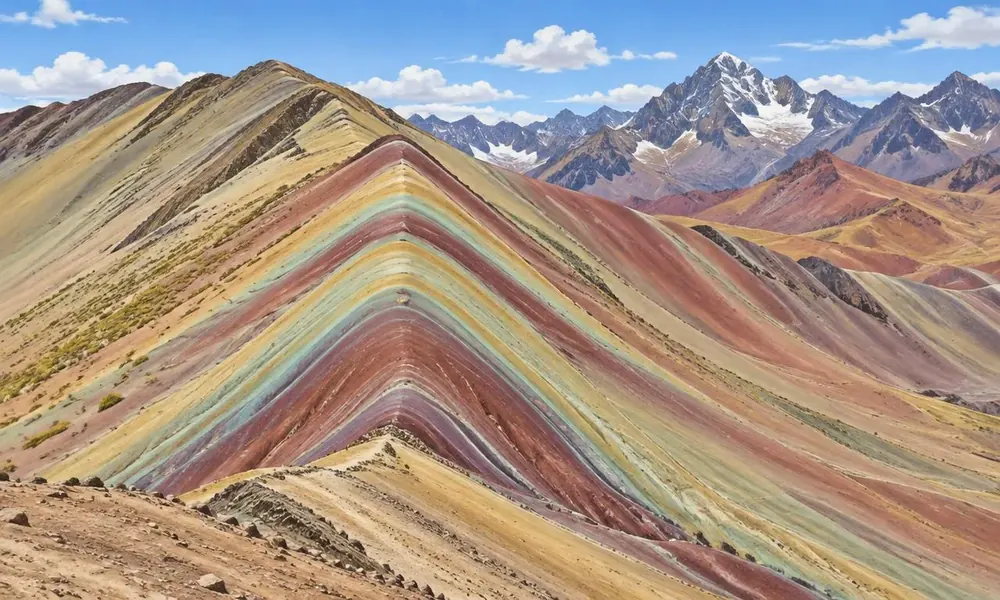
Rainbow Mountain is scheduled for Day 4; Red Valley is not confirmed in this package. Rainbow Mountain, also called Vinicunca, is the mineral-banded landscape that gives this five-day trek its distinctive destination pairing. It is included in this five-day route, rather than offered as a separate day trip after you return to Cusco.
The approach comes from a quieter side than the usual day-trip route. That changes the walking experience, but the main viewing area is shared with other visitors. Weather, snow cover and visibility also affect what you see. Treat photographs of brightly defined bands as examples of favorable conditions, not a guaranteed appearance on your date.
Red Valley is a separate extension, not another name for Rainbow Mountain. Adding it can mean extra walking, access arrangements and charges. Ask whether it is feasible for your departure and fitness level before building it into your expectations. Our Rainbow Mountain guide provides wider destination context; use WhatsApp to confirm the exact Day 4 route, any proposed detour and current rules with us.
Rainbow Mountain is known for its mineral-colored bands and high-Andean setting. The exposed viewpoint can be cold and windy, with snow possible even in the dry season; keep warm layers, gloves and waterproof protection in your daypack. The exact Day 4 viewpoint elevation is not specified here; the trek’s listed maximum remains approximately 5,200 m at Palomani Pass.
Ausangate hot springs: Upis and Pacchanta explained
Hot springs feature on some Ausangate routes, but a visit is not confirmed in this five-day package. Upis is named in our Day 1 outline; walking through the area does not establish that bathing time or thermal-pool admission is included. Keep a possible soak separate from the confirmed trekking program.
Pacchanta is associated with other regional route variants and their hot springs. It is not the confirmed finish of this tour. A description of a longer circuit ending there cannot establish that this five-day Rainbow Mountain route does the same, even when both trips use the name Ausangate.
If hot springs are important to you, raise that preference before reserving. The useful questions are which location would fit the verified route, whether access is available, how the stop affects walking and transport, and what it costs. For this booking, the confirmed highlights remain high-country trekking, camping and Rainbow Mountain—not a thermal-spa finale.
Best time for the Ausangate trek
May–September generally offers the most dependable dry-season conditions, though freezing nights, snow and storms remain possible. These months are usually the strongest starting point when choosing dates for glacier views and sustained outdoor travel. Dry season means lower typical rainfall, not warm nights or a weatherproof itinerary.
April and October are shoulder months with more variable conditions. They can appeal to travelers with flexible schedules, but a favorable forecast at Cusco’s elevation does not describe conditions on the high passes. Pack for wet weather and cold regardless of the month, and avoid making a single clear viewpoint the only measure of a successful trip.
November–March is generally wetter. Rain, snow, cloud and difficult access can affect both trekking and camping, so seasonal operation needs to be discussed for your actual dates. A private booking does not remove weather constraints. The guide’s decisions about conditions take priority over completing every planned stage.
For photography, cloud can hide the glaciers and snow can cover Vinicunca’s colored bands. Give yourself flexibility around the trek rather than attaching a tight flight connection to the return. Ask about the likely conditions for your month and the arrangements if trail access changes; no season guarantees uninterrupted views or a fixed route.
Ausangate trek with or without a guide
Experienced, self-reliant trekkers may tackle Ausangate without a guide, but this package is a supported trek and the remote altitude makes independent travel demanding. The decision is less about whether a trail exists than whether you can manage navigation, cold-weather camping, food, local access and illness without an organized team.
Ask your quote to specify guiding, cook, horsemen and transport, including the team’s responsibilities if conditions change. Horses may support the operation, but travelers still need the fitness and acclimatization to complete demanding walking days; this is not a riding itinerary.
Independent hikers take responsibility for route verification, suitable equipment, fuel and food, water treatment, community payments and a workable emergency plan. A downloaded track alone does not establish safe current access. Published fees and access practices can vary between routes and dates: confirm current rules with us rather than treating an old trail report as permission.
Our Ausangate planning guide covers the broader research context. Choose this product when you want the supported five-day Rainbow Mountain route, and choose independent travel only with the skills and preparation its remoteness demands. Respect Andean communities, livestock and working trails whichever format you use.
Ausangate vs Salkantay: which trek suits you?
Choose Ausangate for remote glacial landscapes and sustained high-altitude camping; compare Salkantay if your priority is a trek commonly paired with Machu Picchu. The important distinction is the experience you want, not a blanket claim that one trail is easier, cheaper or better for every traveler.
Ausangate emphasizes glaciers, glacial lakes, open grazing country and encounters with the landscape of alpaca-herding Andean communities. This package adds Rainbow Mountain and four camping nights, with most nights above 4,000 m. You need to want the camp experience as well as the headline viewpoint, because both shape every day of the trip.
Salkantay products vary in duration, accommodation and their Machu Picchu arrangements. Compare the actual route, sleeping elevations, included services and ticket coverage rather than relying on the trek name. Machu Picchu is not included in this Ausangate package. If it is essential to your Peru trip, budget and schedule it separately.
Browse our tour collection to compare formats. If you want mountain scenery without four nights under canvas, a shorter excursion may suit your schedule better, although even a day hike at high altitude requires preparation.
Compare an Inca Trail itinerary if your priority is a historic walking route associated with Machu Picchu. This Ausangate package instead offers glacial scenery, four camping nights and Rainbow Mountain, without Machu Picchu. Compare actual routes, altitude, tickets and services. A Seven Lakes excursion is a distinct regional day-trip format, not this five-day route; browse Cusco day trips and check each itinerary’s stops.
Ausangate: glacial lakes, sustained high-altitude camping and Rainbow Mountain in this package; Machu Picchu excluded.
Salkantay: commonly paired with Machu Picchu; accommodation and ticket coverage depend on the product.
Inca Trail: a historic walking route associated with Machu Picchu; compare its actual permits and services.
Camping, packing and comfort on Ausangate
The route lists four nights camping. Ask which camping equipment is supplied and whether sleeping bags and trekking poles can be rented. Tent-sharing arrangements, sleeping-mat specifications, sleeping-bag comfort ratings and personal baggage allowance are not specified in the current package description; obtain these in writing before reserving.
Pack for freezing nights, wet weather and strong mountain sun. Use the sleeping bag’s comfort rating rather than a vague claim that it is suitable for Peru.
Ask about boiled and filtered drinking water and campsite toilets for your departure. Bring refillable bottles, and discuss daily carrying capacity during the briefing. Campsite facilities are basic; ask about the arrangements on the verified route if privacy or accessibility is important. Do not use descriptions of facilities on a different circuit as a substitute for that information.
Send vegetarian, vegan, gluten-free and allergy requirements when requesting your quote, and ask which needs can be met. Bring your preferred personal snacks, which are excluded. Discuss serious allergies directly rather than relying on a short dietary label.
Confirm the personal baggage allowance and which items travel with the horse team. Keep water, weather protection and immediate essentials in your daypack. Request Cusco storage costs and handover or collection arrangements for larger luggage. Families should discuss children’s ages and hiking experience individually: general policies for Machu Picchu visits do not establish suitability for this very challenging route.
Do not rely on mobile reception, Wi-Fi or charging facilities during this remote trek. Bring a power bank for personal devices. Ask how the guide would contact the office; communication equipment for this departure is not specified; personal phone service is not an emergency plan. No Ausangate-specific minimum child age is stated: Machu Picchu or Inca Trail age guidance does not establish suitability here. Ask about solo places on group departures; this camping package does not specify a single-tent supplement.
Broken-in hiking boots and warm layers.
Waterproof shell, warm hat and gloves.
Dry camp clothing in waterproof bags.
Sun protection and sunglasses.
Headlamp and personal medication.
Refillable water bottles.
Sleeping bag suitable for freezing nights; confirm the comfort rating before renting.
Trekking poles if required; rental costs are extra.
Ausangate trek FAQs
How Long is the Ausangate Trek?
This Ausangate trek lasts 5 days / 4 nights, beginning with Cusco hotel pickup and ending with a return to Cusco. The five-day itinerary includes Rainbow Mountain on Day 4; allow additional days beforehand for acclimatization.
How Difficult Is The Ausangate Trek?
The five-day Ausangate trek is very challenging because of sustained high-altitude walking, most camping nights above 4,000 m and cold conditions. Train for consecutive hiking days and allow several days of acclimatization in Cusco; fitness alone does not prevent altitude illness.
What is the Elevation of the Ausangate Trek?
This five-day Ausangate trek reaches approximately 5,200 m at Palomani Pass, with most camping nights above 4,000 m. Palomani is a trekking pass, not Ausangate’s mountain summit. Individual campsite elevations are not yet specified.
How Cold is the Ausangate Trek?
The Ausangate trek brings freezing nights, including during the dry season. Wind, snow and storms can add to the exposure. Pack warm camp layers and discuss the sleeping bag’s comfort rating before choosing your own equipment or a rental.
Can I Hike The Ausangate Trek Without A Guide?
Experienced, fully self-reliant hikers can consider the Ausangate trek without a guide, but must manage navigation, camp logistics, access and emergencies themselves. Request guided support, a cook, horsemen and transport in your quote; independent travel is a different undertaking.
What Does It Cost To Hike The Ausangate Trek?
Request the full trek total, including any sleeping-bag or pole rental and admission or community charges. Budget separately for insurance, tips, personal snacks and drinks; get amounts and inclusion status in writing before paying.
Where Do You Sleep On The Ausangate Trek?
The Ausangate route has four camping nights, most above 4,000 m. Request camping-equipment coverage, sleeping-bag rental costs, tent sharing, mats, bag comfort ratings and baggage allowance in your quote. Ask about Cusco luggage-storage costs and handover or collection arrangements.
Do You Need Trekking Insurance for the Ausangate Trail?
Arrange trekking insurance explicitly covering hiking to 5,200 m and relevant evacuation, medical care and cancellation risks. Check altitude limits and exclusions with your insurer. The emergency horse and guide support do not replace insurance or guarantee immediate evacuation.
Ausangate Trek Vs. Salkantay Trail Trek?
Ausangate vs Salkantay is a choice between remote glacial scenery with sustained high-altitude camping and a route commonly paired with Machu Picchu. This five-day Ausangate package includes Rainbow Mountain, not Machu Picchu; compare each itinerary’s accommodation and inclusions.
What is the Best Time Of Year to See Rainbow Mountain?
May–September generally offers the most dependable dry-season conditions for Rainbow Mountain. Cloud, snowfall and storms remain possible, and snow can obscure the mineral bands. April and October are variable shoulder months; plan for cold weather in every season.
Can you Hike Rainbow Mountain in One Day?
Yes, a Rainbow Mountain day hike is a separate tour format from this five-day camping trek. It does not provide the same extended Ausangate experience, and altitude preparation still matters. Explore Cusco day trips if time is limited.
What Makes Rainbow Mountain Colorful?
Rainbow Mountain’s colors come from different mineral-bearing sediment layers exposed by geological processes and erosion. Lighting, moisture and snow influence their appearance. The bands are natural, but their intensity varies, so photographs cannot guarantee the view on your trekking date.
Is this Ausangate trek a loop, and how far do you walk?
The complete walking circuit, total distance and daily walking hours have not yet been verified for this five-day Rainbow Mountain route. Cusco pickup and return do not establish a walking loop. Obtain the guide-reviewed connecting stages, camps, final trailhead and walking statistics before booking; other circuit figures may not match.
What is the spiritual meaning of Ausangate?
Ausangate is revered by local Andean communities as an apu, a sacred mountain associated with protection and the surrounding landscape. Respect local customs, access arrangements and livestock, and ask permission before photographing people. This package does not promise a ceremony or festival visit.
Check Ausangate trek dates on WhatsApp
Ask about your Ausangate trek dates on WhatsApp: send your preferred date, number of travelers, Cusco arrival date and hiking experience. The route takes 5 days / 4 nights; ask for the proposed group size. Request the confirmed route, itemized total and rental details before paying.
You can start with: “Hi, I’m interested in the Ausangate Trek 5 Days via Rainbow Mountain. Preferred date: __. Travelers: __. Cusco arrival date: __. Hiking and altitude experience: __. Please confirm availability, route and total costs.” Add sleeping-bag or pole rentals, dietary needs and airport pickup details to the conversation.
Get written confirmation of your departure, connecting route, camps, itemized total, rentals, admission fees, airport transfer and luggage-storage arrangements before paying. Request date-change, cancellation, closure and refund terms with the trek-specific deposit and balance schedule. Read the changes and refunds guidance.
Availability, group arrangements and services require confirmation.
Route variations below are planning context, not additional inclusions or changes to this listed tour. Ask for a dated proposal for any different route.
Which Ausangate trek itinerary should you choose?
Many multi-day Ausangate trips take roughly four to six days, but there is no single standard circuit. “Classic,” “complete” and “express” are marketing labels unless accompanied by an actual route. Ask where you sleep, which passes you cross and whether the starting transfer replaces a section shown in another itinerary.
A full circuit favors a longer immersion around the massif. A shorter traverse may focus on selected lakes and valleys, while a Rainbow Mountain extension changes the route and can add demanding walking. Vinicunca is not included in every Ausangate trek. The number of named attractions matters less than the relationship between daily effort, sleeping altitude and escape options.
Request a route map with overnight stops before choosing. Published total distances vary because trailheads, side trips and endings differ; there is no useful universal kilometre figure for every package. If two quotes use different camps, treat them as different journeys until the operator explains the difference. Start with the Ausangate trekking itinerary, then request confirmation for your own dates.
Full circuit: compare camps and passes, not just the day count.
Short traverse: check which circuit sections are omitted.
Rainbow Mountain extension: confirm extra walking, fees and transfers.
Choose between a longer circuit and a lower overnight profile
If two proposals solve different problems, do not rank them by days alone. A longer circuit may reduce the longest walking stage yet add another night at elevation. A shorter traverse may reduce camping nights while concentrating ascent and descent. Write down your limiting factor first: sustained walking, cold camping, or overnight altitude exposure. These are different constraints and may favor different routes.
Use the camp sequence to identify which proposal actually addresses that constraint. For example, an extra day is useful for shorter stages only if the hardest stage is divided; an extra high camp is not evidence of a gentler altitude progression. If neither proposal addresses your concern, ask for a different route rather than a faster version of the same circuit. Any individual altitude-risk decision belongs with a qualified clinician, not a sales assurance.
Ausangate is separate from the controlled Inca Trail route and does not normally use its permit system. Community, camping or local entry payments may still apply. Confirm current requirements and who collects each payment before departure.
Can a solo traveler join a shared departure?
Possibly, but do not assume an advertised departure is confirmed. Ask about minimum numbers, the cancellation deadline if a group does not form, tent-sharing arrangements and any single supplement. Request written alternatives before paying for transport or accommodation that you cannot change.
Can I ride a horse instead of walking?
Pack animals carrying equipment are not automatically riding horses. Riding may be unsuitable on particular terrain, and an animal is not a substitute for descent or medical care. Ask separately about a riding service, an emergency animal, rider limits and what happens where riding is impossible.
Will my phone work and can I charge it?
Do not rely on continuous mobile coverage or campsite electricity. Bring sufficient battery capacity, protect electronics from cold and download navigation information before leaving Cusco. Ask what communication equipment the guide carries; your personal phone and an operator’s emergency communication system are different things.
Can I book a lodge-to-lodge Ausangate trek?
Some itineraries are marketed with lodge accommodation, but this is not the default for every circuit. Ask for the actual overnight locations and which nights involve tents, shared rooms or another arrangement. Check heating, bedding, bathroom access and any route changes before comparing a lodge quote with a camping quote.
Can I use a drone or photograph local people?
Ask permission before photographing individuals, homes or working animals. Drone use can raise separate aviation, land-access, privacy and community restrictions; permission from one person does not settle every requirement. Do not launch unless the current applicable rules and local consent have been checked for the exact location.
Should I pay for an extra day if it adds a high camp?
Only if its benefit matches your needs. Establish whether it divides a difficult stage, adds a side trip or merely extends the same high-altitude exposure. More days can buy more scenery without providing the easier itinerary you wanted.
Still have a question?
Ask for the proposed route and any optional arrangements in writing; an enquiry is not a reservation.