
Classic Inca Trail 4 Days to Machu Picchu
The Classic Inca Trail is a multi-day walking journey from Km 82 through high mountain passes, archaeological sites and cloud forest toward Machu Picchu. This proposed four-day, three-camping-night format is for travelers who want the trail itself—not only the final visit.
Plan for consecutive climbs and stone-step descents, camping and a Sun Gate approach subject to the authorized route. Roughly 42 km and a high point near 4,215 m are commonly published planning estimates. Price is by date-specific written quote; confirm the itinerary, camps, access and services before committing.
Check my Classic trek dates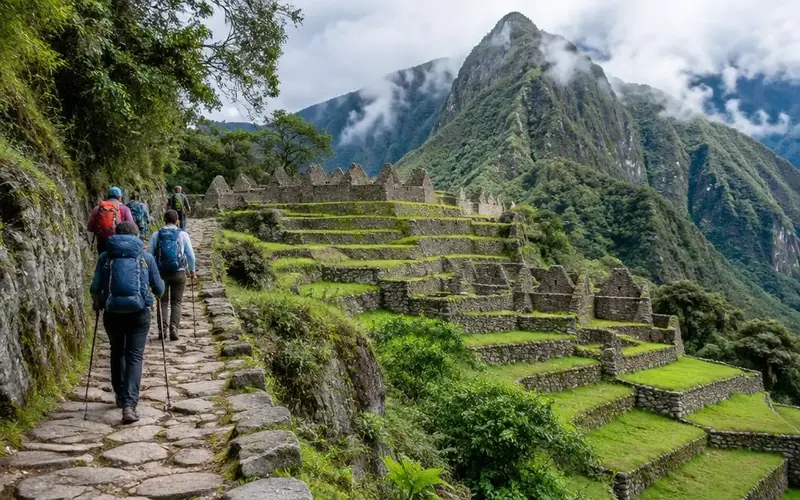
Choose Classic for the whole trail journey
Classic links valley walking, open high ground and greener archaeological landscapes over successive days. Llactapata, Runkurakay, Sayacmarca, Phuyupatamarca and Wiñay Wayna give the approach its own character. Three camping nights are central to this proposal; they are not hotel nights or arrival accommodation in Cusco.
Choose it if repeated hiking and camping are part of the attraction. The Short Inca Trail is a different Km 104 route with one main hiking day and a proposed hotel night, not Classic compressed into two days. A two-day train visit avoids multi-day trekking but still involves site walking and steps. Compare those alternatives only if the Classic experience does not match your time or needs.
Your proposed four-day Classic Inca Trail itinerary
Day 1: Km 82 and the first camp
Proposed road transfer from Cusco to Piscacucho, or Km 82, for entry checks. Walk through the valley past the Llactapata area toward the first allocated camp. A Wayllabamba-area overnight is an illustrative pattern, not a guaranteed assignment. First proposed camping night.
Day 2: Dead Woman’s Pass and the descent
The illustrative sequence climbs toward Warmiwañusca, or Dead Woman’s Pass, before descending toward the Pacaymayo area. The assigned camps determine how much walking falls on this day. Second proposed camping night; request the sleeping elevation and daily ascent and descent.
Day 3: Mountain ruins and cloud forest
The proposed route continues through the Runkurakay, Sayacmarca and Phuyupatamarca areas toward Wiñay Wayna. Further climbs and stone-step descents follow two active days. Third proposed camping night; the final assigned camp changes the next morning’s approach.
Day 4: Sun Gate, authorized visit and return
Planned approach toward Intipunku, the Sun Gate, and the Machu Picchu visit under the access actually secured. Checkpoint opening, camp location, pace and weather shape arrival; sunrise is not promised. Confirm descent, Aguas Calientes rail connection and road return. No further overnight is proposed within this four-day sequence.
The four stages above illustrate the Km 82 journey, not confirmed camp allocations or a navigation track. Wayllabamba, Pacaymayo and Wiñay Wayna describe one overnight pattern; different assigned camps redistribute distance, climbing and the final morning’s walking. Request camp names, sleeping elevations, daily distance, ascent, descent and walking-time ranges for your departure. If allocations are pending, ask when the updated walking and sleeping profile will arrive and how material changes are handled.
Day 1 is an introduction, not a rest day or an acclimatization substitute. Day 2’s high-pass climb is followed by a descent, while Day 3 has more rises and long stone stairways on tired legs. Day 4 combines the final trail approach, permitted site walking and transport connections. A shorter final hiking stage does not make the return day empty.
Confirm the briefing, pickup location and trailhead transfer separately from airport arrival. After Machu Picchu, the proposed return runs through Aguas Calientes and the agreed rail and road connections. Ask for descent transport, train service, stations, reporting time, final drop-off and luggage collection. Do not tie an essential same-night flight or intercity bus to an estimated return.
Permits and dates: establish what is actually available
Inca Trail access requires an authorized operating company, not an independent backpacking plan using a general citadel ticket. Ask who legally operates your departure, how its current SERNANP authorization can be checked and which guiding arrangements apply. A reseller’s logo does not verify the operating company. The Inca Trail guide explains the official route framework.
Send your start date, alternatives and traveler count. Ask whether official places remain for the intended route, whether the company can operate a suitable departure and whether final-day admission and return services fit. A group being full is not necessarily official route availability being exhausted; a calendar, quote or payment receipt alone does not prove named entry has been issued.
Check the release process for your travel season rather than copying last year’s calendar. A Ministry communiqué for the 2026 sales process linked Inca Trail tickets to Circuit 3B; it does not establish future availability or a permanent entitlement. Ask for the rights actually issued and inspect names, dates and route details promptly after confirmation.
If the intended Classic date is unavailable, check nearby Classic starts first. For fixed dates, consider Short or a train-based visit only after their own access and services are checked. These are different experiences, not transferable Classic permits or guaranteed substitutes. The permit guide covers identity and confirmation questions; mention renewals or errors before issuance and obtain service-specific instructions rather than assume corrections are automatic. Do not assume an issued permit can move to another person or date. Confirm which original identity document and renewal evidence must be presented at checkpoints; do not rely on a phone image or photocopy being accepted.
Sun Gate arrival is not unrestricted Machu Picchu access
Intipunku, the Sun Gate, is the planned walking approach, not a promise of sunrise, clear views or a particular photograph. The assigned final camp, checkpoint opening, pace, weather and permitted route determine the arrival. A trail approach does not establish Circuit 2, two complete visits or later re-entry.
The proposal must identify the Machu Picchu admission supporting the final day, its circuit, visit conditions and guiding scope. Huayna Picchu and Machu Picchu Mountain are not assumed inclusions; any additional access needs availability, timing, effort and return-transport compatibility checks. Use the circuit guide to understand the alternatives, then rely on the issued rights for your departure.
Difficulty, distance and altitude: prepare for repeated effort
Classic is challenging because of sustained climbs, uneven stone steps, repeated descents and consecutive walking days at altitude. Roughly 42 km (26 miles) and a high point near 4,215 m (13,830 feet) at Warmiwañusca are commonly published estimates, not independently verified survey measurements here. They do not specify daily effort, total ascent or camp elevation. Ask for the actual walking profile; a different camp pattern can change which day feels hardest.
Build up progressively with hill walks, stairs, controlled descents and back-to-back active days using your intended footwear and daypack. Consider balance and knee comfort late in a walk, not only uphill fitness. You do not need technical climbing skills for the usual walking route, but that does not make it an introductory stroll. The difficulty guide and training guide cover detailed preparation.
Allow separate arrival and altitude preparation before departure. Fitness does not prevent altitude illness and no fixed number of nights guarantees readiness. Seek individualized clinical advice for personal health concerns. If symptoms suggest altitude illness, stop ascending and tell the guide promptly; do not continue higher while symptomatic. Seek assessment; worsening symptoms may require descent, not continuing toward a pass to preserve the itinerary.
Three camping nights: sleep, toilets, food and water
Confirm tent occupancy, sharing or separate-use options, mats, sleeping-bag provision or rental and equipment sizing and condition. Ask about expected overnight conditions at your actual camps and dates, an appropriate sleep system and what warm layers to bring. Keep a dry change protected inside waterproof packing; do not expect wet clothing to dry overnight. The sleeping-bag rental guide helps compare specifications once provision is known.
Ask what toilets, privacy, handwashing and washing arrangements are expected at camps and walking stops. A portable toilet tent, if offered, needs its sharing and operating times specified; it is not an automatic private bathroom. Do not rely on hot showers, charging or continuous phone coverage. Plan personal hygiene supplies, a headlamp and power for essential devices. The camping and toilets guide describes reported trail conditions, not an approved inclusion list for this departure.
Request the first and last included meals, daily food schedule, starting drinking-water supply, treatment method, refill points and contingency if a refill is unavailable. Obtain guidance on bottle capacity for the longest refill interval, starting water at Km 82 and the first treated refill; establish whether supplies are available while walking or only at scheduled stops. Keep drinking water accessible and do not drink untreated stream water. Dietary preferences and serious allergies require different checks; willingness to adapt a menu does not guarantee avoidance of cross-contact. Resolve serious-allergy feasibility before payment with the person reviewing the kitchen plan: what controls are possible, what cannot be accommodated and how the decision is confirmed privately in writing. Use the food and dietary guide for the questions to resolve before booking.
Porters, your daypack and the return-train bags
Shared camp-equipment carrying and personal luggage carriage are different services. Confirm whether personal support is included, its allowance, whether sleeping equipment counts, bag format, access during the day and additional charges. Do not pack to a competitor’s allowance or treat a worker-protection load limit as a traveler allowance. Keep water, rain protection, warm layers, medication, identity document and valuables with you; the packing guide helps separate bags. A bag carried ahead to camp may be unavailable during walking; obtain its actual access and handover schedule, including the final morning.
Arrange main-luggage storage, charges, collection and the final-day bag handover. Verify baggage rules for the rail service actually booked; trail carriage does not establish a train allowance or a free separate transfer. Ask how all returning bags fit the transport and when you regain stored belongings.
Ask about staff pay, equipment, meals, shelter, load checks and how concerns are handled rather than relying on ethical badges. Respect crew members and ask before photographing people. Tips are discretionary, not a substitute for wages; request any suggested amounts with clear units and crew counts. Our porter welfare guide and tipping guide cover the detailed checks.
Who can request it, and what if someone cannot continue?
Beginners, older travelers, children and slower walkers need a route-specific assessment, not automatic acceptance or a universal age rule. Describe recent hill walking, descents, consecutive-day recovery and camping experience. Solo travelers should confirm whether dates can operate, tent sharing, separate-use options and supplements. Families should include children’s ages and their actual walking and camping experience. Solo travelers should distinguish one place in a shared departure from private service for one person. For children, resolve supervision, guiding and tent arrangements, including what happens if a child and accompanying adult stop.
For mixed abilities, ask about expected pace, front and rear guiding, regrouping and qualified coverage if travelers separate or one person stops. Private service can cover only the arrangements explicitly contracted; it does not remove route rules, altitude or timing constraints. Ask what happens if progress cannot meet a checkpoint or transport deadline. A porter is not automatically an additional guide or a child-carrying service.
An early exit is not necessarily a roadside pickup. Before payment, ask where exits are feasible, who accompanies an unwell traveler, how the remaining group continues, communication and first-aid arrangements, extra costs and whether later services can be used. Do not assume oxygen, a horse, vehicle or helicopter is available. Check insurance for the actual altitude and activities, medical care, evacuation and interruption. A non-hiking companion needs separate transport and admission planning, not an assumed meeting inside the site.
Best time and February: weather preference is not availability
May through September is generally the drier planning window; April and October can be useful alternatives. Rain, cold camp nights and obscured views remain possible in any period. Wetter conditions can slow stone-step descents and keep equipment damp. Compare the weather guide, then check route operation and permits for your exact dates.
The Inca Trail normally closes for February conservation and maintenance. Check your travel-year official notice and later restrictions before relying on a departure. The SERNANP reopening notice announced reopening from 1 March 2026 and identified Piscacucho/Km 82 among the routes enabled then. This dated notice does not guarantee future operation, and a trail closure does not itself establish the status of citadel visits or trains.
Classic Inca Trail cost: request the complete written quote
Request an itemized quote for the four-day trek with three camping nights, stating your dates and party size. Confirm currency, taxes, payment fees, supplements and quote validity. The checklist below identifies services to confirm, not guaranteed inclusions. For shared departures, check the operating minimum, group limit and non-operation terms; for private service, confirm exactly which arrangements are exclusive to your party, not private trails or campsites.
- Access and staff: operating company, authorization, exact trail date and route, final-day Machu Picchu rights and guiding language and coverage.
- Three camps: assigned locations, tent occupancy, sleeping equipment, meal boundaries, treated water and toilet arrangements.
- Bags and equipment: shared camp support versus personal carriage, allowances, storage, rentals and final-day handover.
- Transport: briefing and pickup, trailhead road leg, descent arrangements, return rail service, stations and final road transfer.
- Extras and terms: optional access, personal meals and purchases, discretionary tips, insurance, fees, deposit, balance, changes, cancellation and disruption.
Check your Classic dates before committing
Start with preferred dates, alternatives and traveler count. Add optional details that change the proposal: arrival plans, recent walking experience, children’s ages, pace needs, tent sharing, equipment or dietary questions. Existing ticket dates, routes and times need compatibility checks before duplicate purchases; reuse, discounts or refunds are not automatic.
Before payment, confirm which services can be secured, what remains pending and what happens if essential access cannot be obtained. Obtain the deposit and balance schedule, payment charges, identity-correction and renewal process, cancellation, change and closure terms for each supplier. Have each component marked included, excluded, optional or pending, with quote expiry and acceptance steps. Obtain the written outcome if essential access cannot be secured: which payments return, which costs remain and whether alternatives require separate agreement. Distinguish traveler cancellation, operator non-operation and external disruption; do not assume all components share one rule. Keep the written proposal, confirmations and receipts; a receipt alone does not establish every service secured. The quote checklist supports comparison.
Do not send identity documents, passport numbers, ticket QR codes, payment details or medical records in the initial inquiry. Before sharing further information, review the privacy notice and agree the necessary data, recipient and submission channel, including any sharing with the operating company or ticket suppliers. This inquiry is not a reservation and holds no permits, admission, camps or departure places.
Request my itemized Classic quoteClassic Inca Trail: booking questions
Is this four days with three camping nights?
Yes, that is the proposed Classic format. Arrival and altitude preparation are separate. Camps and services require a dated written proposal; no hotel night or five-day version is offered here.
Where does the Classic Inca Trail start?
The proposed walking start is Piscacucho, commonly called Km 82. Confirm the Cusco pickup, road transfer, reporting and entry checks rather than treating airport arrival as trek pickup.
How long and how high is the Classic route?
Roughly 42 km (26 miles) and a high point near 4,215 m at Dead Woman’s Pass are commonly published planning estimates, not independently verified measurements here. Request daily distance, ascent, descent and camp elevations for the route actually offered.
Are Wayllabamba, Pacaymayo and Wiñay Wayna guaranteed camps?
No. They illustrate one overnight pattern. Assigned camps and conditions can move walking between days and change the final approach. Request the allocation status and how changes affect effort.
Can I hike without an authorized operator?
No. Inca Trail access requires an authorized operator and the applicable guided arrangements, not a general citadel ticket. Verify who legally operates the departure and its current authorization before paying.
How early should I book, and what if my date is sold out?
Start checking when dates take shape; no universal lead time guarantees a place. Distinguish a full company group from unavailable official route places. Check nearby Classic starts first, or compare separately available Short or train-based options as different experiences.
Does Sun Gate arrival include Circuit 2 or two complete visits?
No such entitlement is promised. The walking approach and final-day visit follow the access actually issued. Ask for the circuit, date, visit conditions and guiding scope; sunrise, clear views and later re-entry are not guaranteed.
Can I add Huayna Picchu or Machu Picchu Mountain?
Ask before booking. Neither is an assumed inclusion. Additional access, timing, walking effort and return transport must fit the trek; a separately available ticket does not by itself make the schedule workable.
Can beginners, children, older or slower walkers request Classic?
Yes, for individual assessment, not guaranteed acceptance. Describe repeated hill walking, descents, recovery and camping experience. Families should provide children’s ages; solo travelers should check departure operation, tent sharing and supplements.
Does fitness remove the need to acclimatize?
No. Fitness does not prevent altitude illness. Allow a separate arrival and altitude plan, seek individual clinical advice when appropriate and report symptoms promptly. Do not continue ascending with symptoms suggesting altitude illness; seek assessment, and recognize that worsening symptoms may require descent. No fixed number of nights guarantees readiness.
Are sleeping bags, private toilets, meals and water included?
Only as explicitly confirmed in the quote. Check sleeping equipment, rentals, tent sharing, toilet operating arrangements, first and last meals, starting water and treated refill opportunities. Do not assume hot showers or an allergen-free kitchen.
Will porters carry my personal bag and is luggage storage free?
Do not assume either. Camp-equipment support and personal carrying are separate. Request the allowance, equipment counting rules, storage charges and collection. Check the return train’s own baggage rules and final-day handover.
What if I cannot keep pace or finish?
Agree guiding coverage, regrouping, separation and early-exit procedures before payment. Feasible help depends on location and conditions. Confirm accompaniment, communication, remaining-party arrangements and costs; a horse, vehicle or funded evacuation is not promised.
Can Classic operate in February?
The trail normally closes for February maintenance. Check travel-year official notices and any additional restrictions before planning a departure.
How much does the four-day Classic Inca Trail cost?
Request an itemized quote for your dates and party, with access, guiding, three camps, equipment, meals, baggage support and return transport, plus exclusions, supplements and booking terms. No fixed rate or automatic discount is published.
Still have a question?
Your dates and party for the proposed four-day camping trek; an inquiry is not a reservation.
Compare other itineraries
Km 104 Short Inca Trail →
A two-day Km 104 proposal with a hotel night rather than three camping nights.
Salkantay + Inca Trail 7D / 6N →
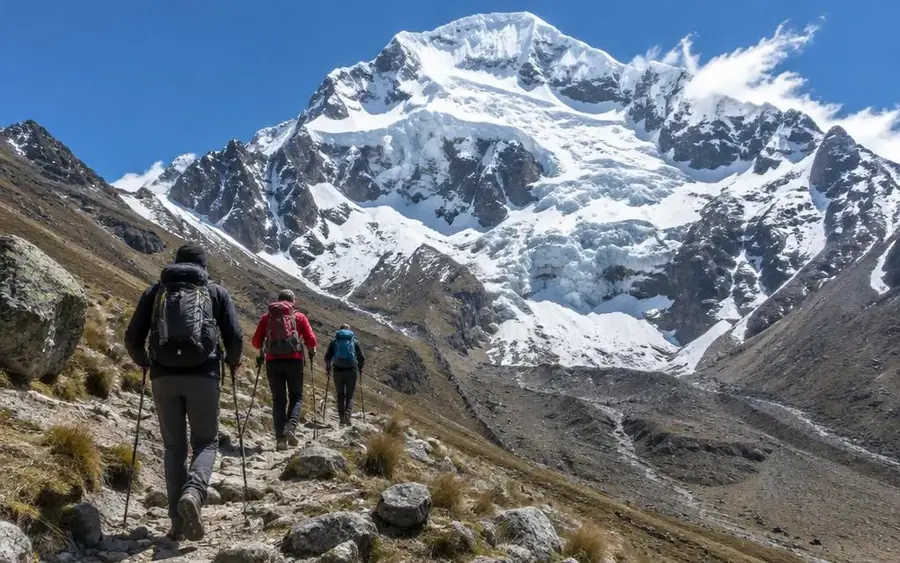
A separate seven-day combination adding Salkantay mountain stages.